The Pilgrims and Private Property: What the Pilgrims Might Have Thought About Communism & Socialism
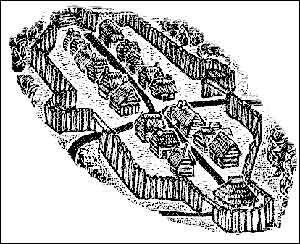
Plimoth Plantation
Did you know that the Pilgrims were among the first Americans to demonstrate the value of self-reliance and private property (one’s labor, skills, land, possessions, etc.)? In Plymouth Colony, food and supplies were initially shared and allocated among colonists in a communal system of farming and food distribution, which resulted in a lack of incentive to work and less overall productivity. With the colony on the verge of starvation, Governor William Bradford let the Pilgrims farm their own land, for their own families, in an individualized, family-oriented system. This system led to increased farming. (A similar system had been applied successfully in Jamestown, Virginia.) This shift to an individualized, family-focused economic system increased productivity and benefited the colony. Bradford describes this early economic shift in Plymouth in his Journal, History of Plymouth Settlement. He writes:
So they began to consider how to raise more corn, and obtain a better crop than they had done, so that they might not continue to endure the misery of want. At length after much debate, the Governor, with the advice of the chief among them, allowed each man to plant corn for his own household, and to trust themselves for that…. This was very successful. It made all hands very industrious, so that much more corn was planted than otherwise would have been by any means the Governor or any other could devise, and saved him a great deal of trouble, and gave far better satisfaction. …
The failure of the experiment in communal service, which was tried for several years, and by good and honest men, proves the emptiness of the theory of Plato and other ancients, applauded by some of later times, –that the taking away of private property, and the possession of it in community, by a commonwealth, would make a state happy and flourishing; as if they were wiser than God. For in this instance, community of property (so far as it went) was found to breed much confusion and discontent, and retard much employment which would have been to the general benefit and comfort. … Let none argue that this is due to human failing, rather than to this communistic plan of life in itself. I answer, seeing that all men have this failing in them, that God in His wisdom saw another plan of life was fitter for them.
The Pilgrims’ early shift from a communal to a self-reliant economic system in Plymouth Colony exposed the practical flaws of the former and the qualities of the latter system. While the communal system led to low morale, poor relations, under-performance, and lack of sustenance in the community; the system of self-reliance led to high morale, proper relations, self-sufficiency, and increase in the colony. This early trial and error in economics by this people revealed the success of self-industry, led to an American view of work and reliance on God, and became a precursor to America’s free enterprise system.
From AHEF and Angela E. Kamrath.
Source for more information:
Kamrath, Angela E. The Miracle of America: The Influence of the Bible on the Founding History and Principles of the United States of America for a People of Every Belief. Second Edition. Houston, TX: American Heritage Education Foundation, 2014, 2015. Third Edition (2020) is available!
Related Blog/Videos:
1. An Introduction to Popular Sovereignty
2. Who were the Pilgrims? Why did they come to America?
3. Why the Pilgrims Identified with the Israelites
4. The Mayflower Compact: The Pilgrims’ First Self-Governing Act in America
5. The Pilgrims’ Mayflower Compact as a Covenant
6: The History of Thanksgiving Day in America
7. Three P’s That Led to Freedom in the West: Printing Press, Protestant Reformation, & Pilgrims
Activity: Miracle of America High School Teacher Course Guide, Unit 2, Part 3 of 3, Activity 5: Sowing and Reaping: The Pilgrims’ Economic System, pp. 92-93, 94. MS-HS.
Sowing and Reaping: The Pilgrims’ Economic System
Purpose/Objective: Students learn about the Pilgrims individualized/family-oriented economic system and private property, which they favored over a communal system and which led to their colony’s prosperity.
Suggested Reading: Chapter 2 of Miracle of America sourcebook/text. Students read sections 2.2, 2.3, 2.7, 2.8. William Bradford, History of Plymouth Plantation. William Bradford & Edward Winslow, letter on First Thanksgiving and “The First Fast Day and Thanksgiving,” Journal of the Pilgrims at Plymouth in New England.
- Comparison Chart and Think-Pair-Share or Think-Aloud. Students read an excerpt from Bradford’s History of Plymouth Plantation on Pilgrims’ economic system of labor and distribution, and how & why it changed from communal/socialistic to individualized/family-focused. Have students also read the chapter on fasting and thanksgiving days in Bradford and Winslow’s Journal of the Pilgrims at Plymouth. Students might want to take notes on their reading. Have students also do some of their own research on various economic systems—including socialism and capitalism. After reading & research, have students, in pairs/groups, discuss why the Pilgrims changed their economic system. Using graphic organizers or two-column notes, each student should consider and write on: What were the effects of the Pilgrims’ two different economic systems? In another comparison activity students might look at and compare the characteristics of capitalist and socialist systems. Students then discuss their analysis as a whole class, with the teacher writing on the board or overhead the comparative notes from the discussion.
Primary Source Reading: History of Plymouth Settlement, 1608-1650, by William Bradford. Edited by Harold Paget. New York: E. P. Dutton & Co., 1920. Pilgrim’s Economic System, Chapter 4, pp. 115-116. Google Books.
To download this unit, sign up as an AHEF member (no cost) to access the member resources page on americanheritage.org.
—–
To receive blog updates, we invite you to subscribe to the Founding Blog on this page.
This blog is provided by the American Heritage Education Foundation (AHEF). AHEF is a non-profit organization dedicated to the understanding and teaching of America’s founding philosophy, principles, documents, and history. AHEF’s work is made possible by the donations of private individuals and organizations. Please consider a tax-deductible donation to AHEF to support our mission. Thank you!
Copyright © American Heritage Education Foundation. All rights reserved.